
ADA parking lot striping requirements in Nebraska
ADA parking rules are not optional. A lot with the wrong count, missing aisles, or worn symbols leaves a Nebraska business open to complaints, fines, and lawsuits. Here is a plain overview of what a lot needs. This is general guidance and not legal advice, so confirm current ADA standards for your specific property.
How many accessible stalls you need
The required number of accessible stalls scales with your total parking count. As a general guide under the ADA Standards:
- 1 to 25 total stalls: at least 1 accessible
- 26 to 50: 2
- 51 to 75: 3
- 76 to 100: 4
- Larger lots add accessible stalls on a sliding scale from there
Count every stall on the property, including the ones behind the building. The requirement is based on the total, and a lot that added spaces over the years often needs one more accessible stall than it has.
Van accessible spaces
At least one of every six accessible stalls, rounding up, must be van accessible. That means a wider stall or a wider access aisle so a lift or ramp has room to deploy, plus an additional "van accessible" sign. On a small lot with a single accessible stall, that one stall is the van space.
Access aisles
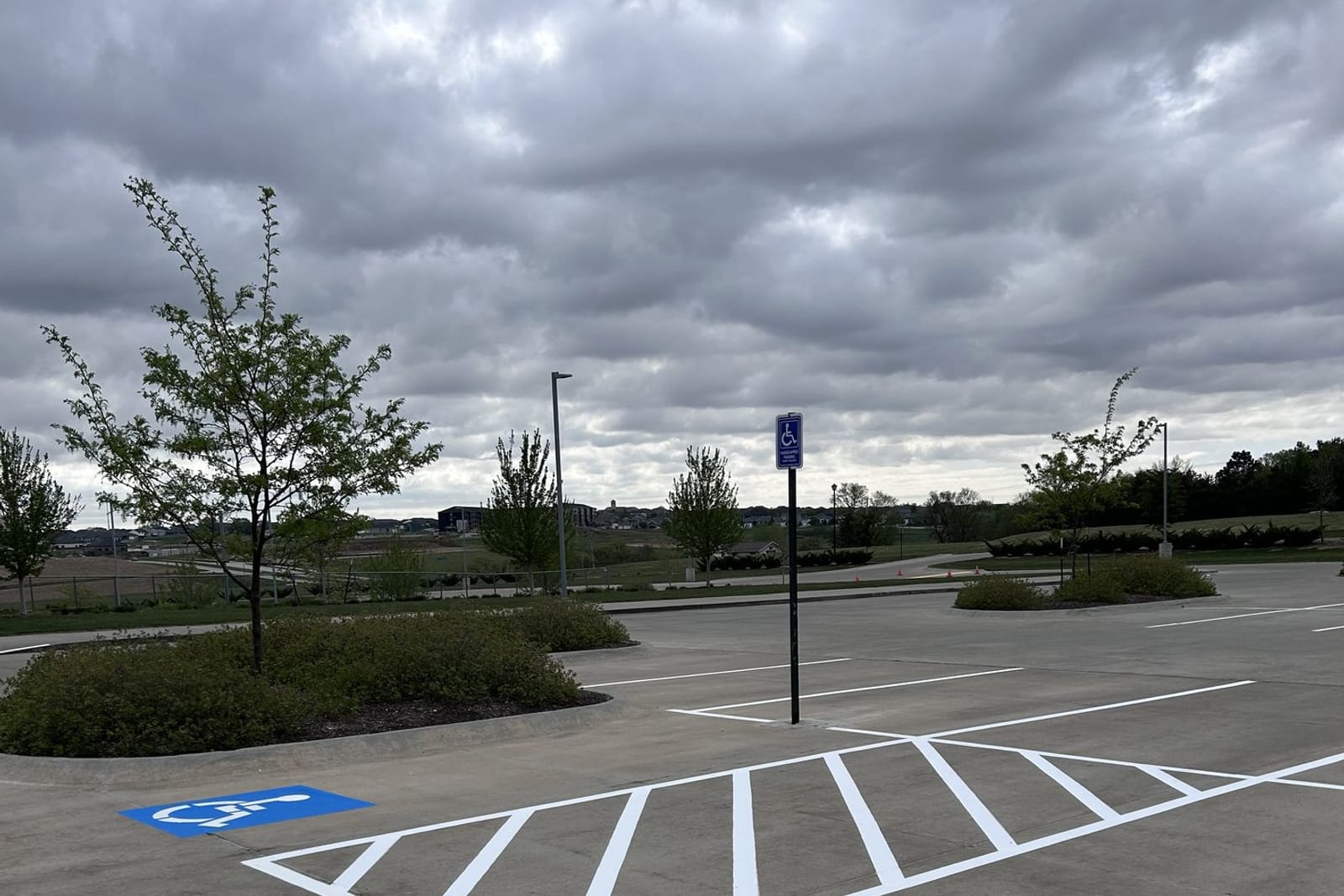
The access aisle is the hatched area beside the stall. It gives a wheelchair or lift room to get out, so it must be marked and kept clear. Two stalls can share one aisle between them, which is the most common layout on a restripe. The hatching is painted so nobody parks in it, and it counts as part of the accessible space, so it needs the same care as the stall itself.
The symbol and the paint
The International Symbol of Accessibility goes in the stall, typically on a blue background. The blue is the standard way to paint it and what most inspectors expect. I lay it down with a stencil in oil-based traffic paint so the symbol stays legible for years instead of fading by the second winter.
Signage
Each accessible stall gets a posted sign, mounted high enough that it is visible even when a vehicle is parked in the space. Van accessible stalls get the additional sign. Paint on the pavement alone is not enough, since a parked car covers it.
Slope and location
Accessible stalls belong on the shortest accessible route to the entrance, on pavement that is close to level. A stall on a slope or across a drive lane from the door technically exists and still fails the customer it is meant for.
Why it is worth getting right
Beyond avoiding penalties, proper ADA striping makes the business usable for every customer who pulls in. I build accessible stalls to current standards on every job, restripe or new construction: blue background, correct symbol, access aisle hatching, and a layout that puts them where they belong.
If you are unsure whether your lot is compliant, send the address. The stall count and the aisles are usually visible from the satellite view, and I will tell you what needs to change before quoting anything.
Common questions
How many accessible parking stalls does my lot need?
One accessible stall for lots with 1 to 25 total stalls, two for 26 to 50, three for 51 to 75, four for 76 to 100, and a sliding scale above that under the ADA Standards.
What makes a stall van accessible?
A wider stall or a wider access aisle so a lift or ramp can deploy, plus a "van accessible" sign. At least one of every six accessible stalls, rounding up, must be van accessible.
Does the accessible stall need a blue background?
The ADA requires the International Symbol of Accessibility and a marked access aisle. The blue background is the standard way to paint it and what most inspectors expect to see.